

Article: The Magic of Artificial Plants in Home Decor | The Home Peck

The Magic of Artificial Plants in Home Decor | The Home Peck
The Quiet Magic of Artificial Plants
There's a corner in every home that feels incomplete. The light isn't quite right for a real plant. The schedule is too unpredictable for watering. The climate control runs constantly. And yet, something green belongs there. Something alive—or at least, something that feels that way.
This is where artificial plants have quietly become one of the most valuable tools in home decor. Not the plastic ferns of decades past, stiff and unconvincing. Today's faux botanicals are different. They're crafted with attention to detail that makes them nearly indistinguishable from the real thing. The slight variations in leaf colour. The natural bend of a branch. The imperfect beauty that real plants possess.
An artificial olive tree in a living room corner. A trailing pothos on a high shelf. Pampas grass in a ceramic vase. These pieces bring the calming presence of nature into spaces where real plants would struggle—or where the people caring for them would. And there's no guilt involved. No brown leaves. No forgetting to water. Just greenery, doing exactly what greenery does best: making a room feel more like home.
Why artificial plants work so well
Plants change a room. This isn't just aesthetic preference—there's something deeply ingrained in the human response to greenery. It softens hard edges. It introduces organic shapes into spaces dominated by straight lines and right angles. It brings colour that feels natural rather than decorative. A room with plants simply feels more alive than one without.
The challenge, of course, is keeping real plants alive. Some homes don't get enough natural light. Some climates make indoor gardening difficult—air conditioning runs constantly, humidity fluctuates, seasons blur together. And then there's the reality of busy lives. Travel, long work hours, the simple human tendency to forget. Real plants require attention that not everyone can consistently provide.
Artificial plants solve this entirely. They thrive in dark corners. They survive weeks of neglect. They look exactly the same in January as they do in July. For spaces where real plants would struggle, faux greenery isn't a compromise—it's the better choice.
And the quality has genuinely transformed. Modern artificial plants use materials that mimic real leaves and stems with remarkable accuracy. Silk, high-grade plastics, and careful hand-painting create pieces that fool the eye—and sometimes even the touch. The stigma that once surrounded fake plants has faded as the plants themselves have improved.
The faux olive tree: an instant classic
If there's one artificial plant that has earned a place in the modern home, it's the olive tree. There's something about its silhouette—the gnarled trunk, the silvery-green leaves, the Mediterranean warmth it evokes—that feels both timeless and contemporary. An artificial olive tree brings presence to a room without demanding attention.
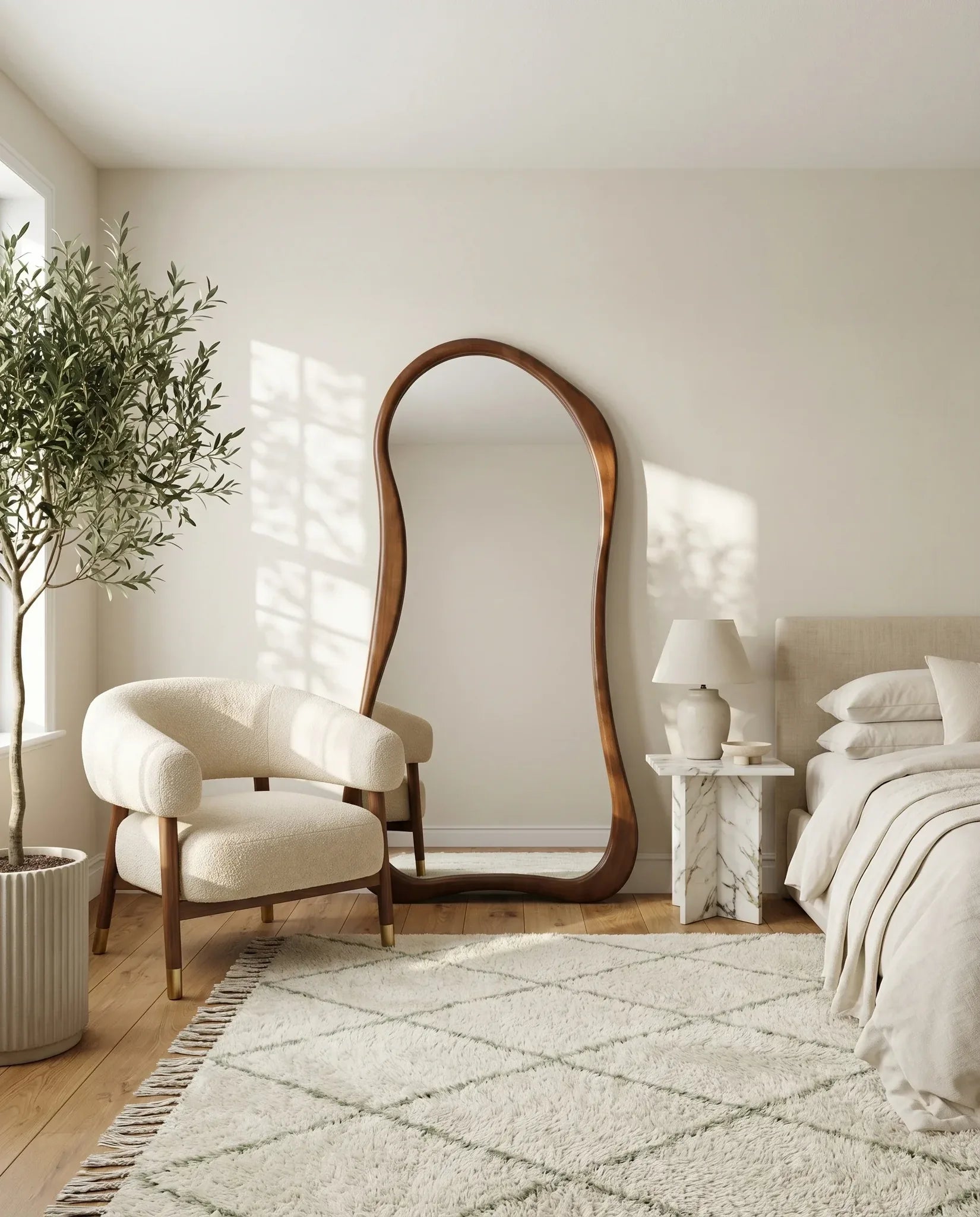
In living rooms, a faux olive tree anchors an empty corner beautifully. Positioned near a sofa or beside a reading chair, it adds height and organic texture to spaces that might otherwise feel flat. The leaves catch light in a way that creates subtle movement, even though nothing is actually moving. It's the kind of piece that makes a room feel finished.
Entryways benefit from olive trees as well. That first glimpse into a home sets expectations, and a well-placed tree signals warmth and intention. It's welcoming without being fussy—a quiet statement that says someone cares about this space.
Bedrooms, too, have embraced the olive tree. In a corner near a window or beside a dresser, it softens the room and brings a touch of nature to the most personal space in the home. Sleep feels different when surrounded by greenery, even when that greenery doesn't require watering.
The key to a convincing artificial olive tree lies in the details. Look for realistic trunk texture—the bark should have character, not uniformity. Leaves should vary slightly in colour, with the silvery undersides that real olive leaves possess. And the pot matters too. A beautiful ceramic or woven basket elevates the entire piece, while a cheap plastic container undermines the illusion.
Beyond the olive: other faux trees worth considering
While the olive tree has earned its popularity, other artificial trees bring their own character to different spaces and aesthetics.
Fiddle leaf fig
The fiddle leaf fig became the darling of interior design for good reason—those large, sculptural leaves make an undeniable statement. But real fiddle leaf figs are notoriously difficult. They drop leaves at the slightest change in conditions. They sulk when moved. They require exactly the right light, exactly the right water, exactly the right humidity. A faux fiddle leaf fig delivers all the visual impact with none of the drama. The oversized leaves fill vertical space beautifully, and the deep green brings richness to neutral rooms.
Monstera
With their distinctive split leaves, monstera plants add instant tropical energy. An artificial monstera works particularly well in contemporary spaces—the graphic quality of those leaves feels almost architectural. Smaller faux monsteras can sit on shelves or side tables, while larger versions make floor-standing statements.
Bird of paradise
For spaces that can handle bold scale, the artificial bird of paradise delivers drama. Those tall, paddle-shaped leaves reach upward with confidence. It's a plant that refuses to blend in—and for the right room, that's exactly what's needed. Near high windows or in double-height spaces, a faux bird of paradise holds its own against the architecture.
Eucalyptus
Faux eucalyptus brings a different mood—softer, more delicate, slightly wild. The silvery-blue leaves and loose, flowing branches feel natural in a way that more structured plants don't. Artificial eucalyptus works beautifully in vases, as part of larger arrangements, or even draped along a mantel or shelf. It's the kind of greenery that looks like it was just gathered from a garden.
Smaller plants: the details that complete a room
Not every space needs a statement tree. Sometimes, the magic happens in smaller doses—a potted succulent on a bathroom shelf, a trailing vine along a bookcase, a single stem in a narrow vase. These smaller artificial plants are the finishing touches that make rooms feel genuinely lived in.
Potted succulents and cacti
Real succulents are marketed as easy—but they still need the right light and careful watering. Artificial succulents need nothing at all. A collection of small faux succulents on a windowsill, a coffee table, or a bathroom vanity adds texture and interest without any maintenance. The variety of shapes—rosettes, spiky aloes, smooth jade leaves—creates visual richness when grouped together.
Trailing plants
Artificial trailing plants—pothos, string of pearls, ivy—bring life to high shelves and difficult-to-reach spots. They soften the hard edges of bookcases and cabinets. They cascade over the sides of planters in ways that draw the eye. These are the plants that make a room feel abundant, like greenery has naturally found its way into every corner.
Herbs and kitchen greenery
A small pot of artificial herbs on a kitchen windowsill brings charm to the heart of the home. Faux rosemary, basil, or lavender adds a touch of the garden to spaces where real herbs would struggle with inconsistent light or forgotten watering. It's decorative more than practical, but that's exactly the point—the look and feel of a kitchen that someone tends to.
Pampas grass and the beauty of the dried aesthetic
Somewhere between live plants and purely artificial, there's a category that has captured attention in recent years: the dried and preserved look. Pampas grass, dried palms, cotton stems, wheat stalks. These pieces blur the line between real and faux—and in home decor, that ambiguity works beautifully.
Artificial pampas grass has become especially popular. Those tall, feathery plumes add texture and movement to any room. In a large floor vase, a spray of pampas becomes a statement piece. In a smaller arrangement on a console table or shelf, it adds softness without overwhelming. The neutral tones—cream, beige, soft blush—work with virtually any colour palette.
The advantage of faux pampas over real is longevity. Real dried pampas sheds. It fades over time. It can trigger allergies. Artificial versions maintain their shape and colour indefinitely. They can be fluffed and reshaped. They stay beautiful year after year.
Other dried-look artificials work similarly. Faux cotton stems in a pitcher or vase bring farmhouse warmth. Artificial wheat or wild grasses add rustic texture. Preserved palm fronds—whether real preserved or completely artificial—create drama with their graphic shapes. These pieces feel natural and organic, even when they're entirely man-made.
Styling faux plants so they look real
The secret to convincing artificial plants isn't just quality—it's placement. A beautiful faux plant in the wrong spot looks fake. The same plant, positioned thoughtfully, passes without question.
Place them where real plants could grow. This is the most important rule. An artificial plant in a dark, windowless corner doesn't make sense—the eye notices, even subconsciously. But the same plant near a window, where real light touches its leaves? That reads as natural. Even if the light isn't enough for a real plant, the suggestion of possibility makes the faux believable.
Upgrade the container. Most artificial plants come in basic plastic pots. Repotting into a ceramic planter, a woven basket, or a beautiful cachepot transforms the entire piece. The container is often what people notice first—a cheap pot betrays the illusion before anyone even looks at the leaves.
Add natural elements. Covering the base of an artificial plant with moss, small stones, or even real soil completes the look. That glimpse of 'earth' at the base makes the whole arrangement feel grounded and genuine.
Mix with real plants. In homes that have some real plants, adding artificial ones alongside creates a fuller, more abundant look. The real plants provide authenticity; the faux ones fill the gaps. Visitors rarely question whether every plant in a collection is real—if some clearly are, the assumption extends to all.
Dust and maintain. Real plants don't collect dust the same way artificial ones do. A quick wipe of the leaves now and then keeps faux plants looking fresh. Dust is the easiest tell—it's the thing that makes artificial plants look neglected rather than natural.
Room by room: where artificial plants shine
Living rooms. A statement tree in a corner. Smaller plants on side tables and shelves. Trailing greenery on bookcases. The living room is where artificial plants make the biggest impact—they're seen daily and set the tone for the entire home.
Bedrooms. Soft greenery creates a calming atmosphere. A faux olive tree beside a window. Small succulents on a nightstand. Pampas in a corner vase. The bedroom benefits from nature's presence, and artificial plants deliver without the worry of overwatering or pests near where you sleep.
Bathrooms. High humidity and low light make most bathrooms hostile to real plants. Artificial greenery thrives here. A small potted plant on the vanity. Eucalyptus stems in a vase. Trailing ivy along a shelf. These touches transform functional bathrooms into spa-like retreats.
Entryways. First impressions matter. A faux tree flanking the door or a plant on a console table welcomes guests with warmth. The entryway often lacks natural light, making artificial plants the practical choice.
Home offices. Greenery improves focus and reduces stress—benefits that matter in a workspace. Artificial plants on desks or shelves bring the same visual calm without the distraction of maintenance during work hours.
Dining areas. A low arrangement as a centrepiece, a tree in the corner, or stems in a vase on a sideboard—artificial plants bring organic warmth to spaces where meals are shared. And there's no worry about pollen or fallen leaves near food.
And that's a kind of magic worth bringing home.
—
Explore our collection of artificial plants at The Home Peck.
Explore the collections: shop artificial plants in Dubai and plant pots & planters, or see our guide on whether artificial plants look real.